Vipassana meditation and Freediving
Introduction
Us freedivers constantly strive for better techniques, new ways to discover and understand ourselves.
In order to reach greater depth, prolong our dive , improve our relaxation, bear with the discomfort in a calmer way, we’ve been including various techniques coming from ancient practices from the East in our training and way of life. Yoga for the body / mind flexibility and control of the nervous system, Pranayama for an acute control over our breath and strengthening of the respiratory muscles, Yoga Nidra for greater and faster whole body relaxation or meditation for better controlling our perpetually agitated minds. These methods and many other methods are in use and are described in length in various blog articles all over the internet.
Today I want to talk about the practice of the Vipassana Meditation technique, from the perspective of an “old student” having completed 3 times a 10-day-course of Vipassana meditation as taught by S.N. Goenka, and how it can help us (or not) in our freediving journey.
This article comes from my own journey and 8 years experience with Vipassana. There have been ups and downs obviously, but it has worked for me as a superpower for every situation in life.
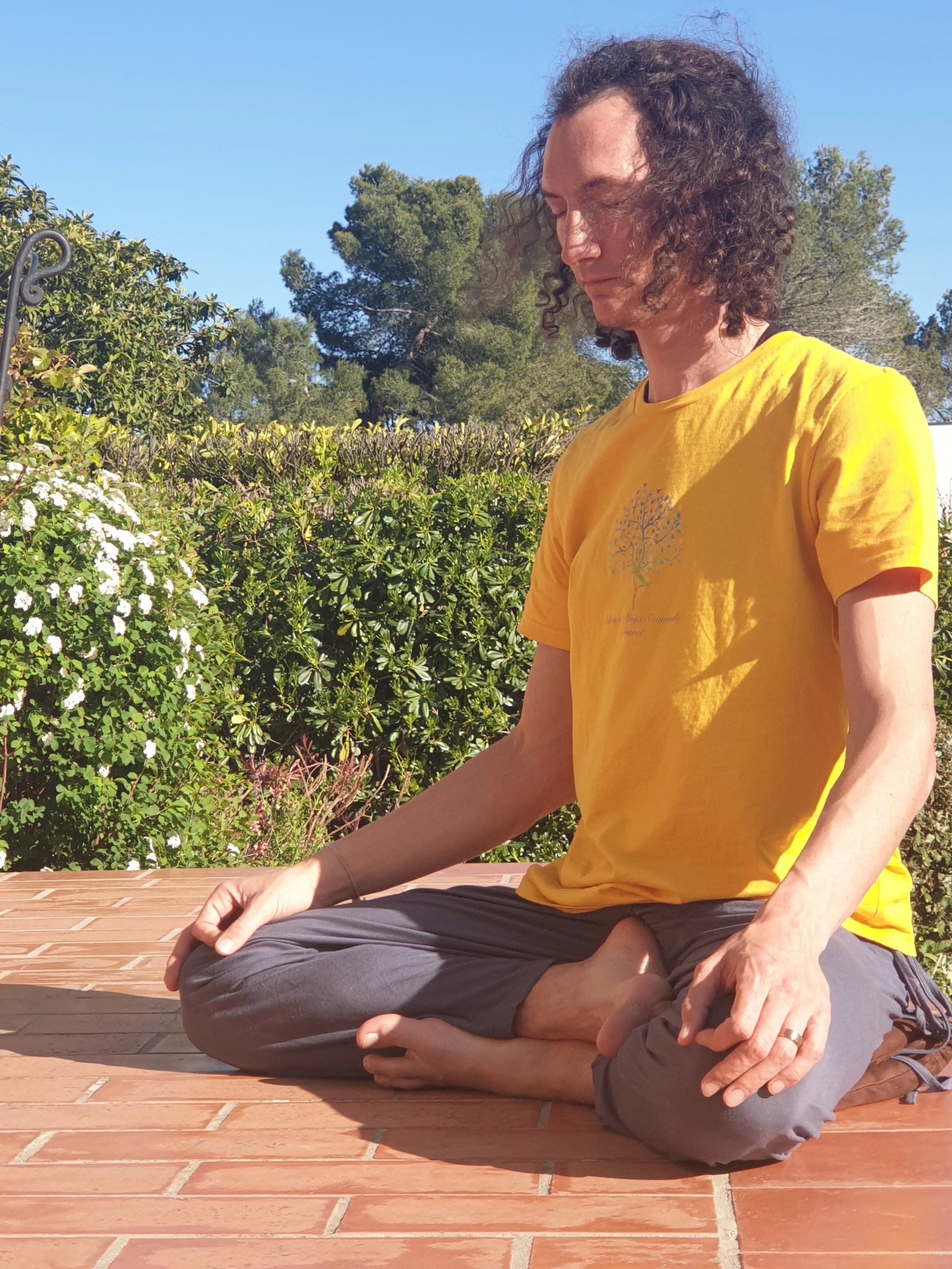
Practicing Vipassana meditation
What is Vipassana and what is it not ?
Let’s start by stating the obvious, the Vipassana meditation technique is not a technique developed exclusively for freediving. It is said that it was discovered ~2500 years ago.
Vipassana means “to see things as they really are”, and has been created, developed, refined and taught to the world by Gautama Buddah himself. Yes, this human being we commonly refer to as The Buddah, passed us on his legacy through this technique. With this technique he wanted to give all human beings a way to end all suffering.
No mysticism, no organized religion, no higher power, just a raw, austere technique aiming at providing all of mankind a way to purify and control their agitated mind, liberate us from our miseries, and learn “The art of Living”.
Therefore this technique was given to every human being, not only freedivers. So the question now becomes:
How does the practice of the Meditation technique known as Vipassana can benefit the freediver in his endeavor to become better ?
The Technique and its benefits for freedivers
This meditation technique takes a minute to master and a lifetime to master.
It is basically observing the body sensation in a methodic and structured way, keeping a non judgmental (equanimous) mind toward all sensation, and with the understanding and experimentation of the impermanence of all sensations (annica).
Call it an advanced body scan.
Of course it is pointless to practice based on this abstract, only a proper 10-day-course can introduce you properly to the depth of the technique.
—-
As a Vipassana meditator, we learn to observe the sensation within the body at depth (even to the bone, or organ level).
As a freediver we can use this acute knowledge to scan ourselves deep for any residual tensions, subtle pains, and either release or accept the sensation, at the surface or during our dives.
Imagine, you’re relaxing prior to a challenging dive, and you’re able to scan the depth of your tissues to actively relax your spleen, relax your eustachian tubes, or your lower back. You can now become one with the sea, and dive with no residual tensions.
—-
As a Vipassana meditator, we learn to become observers of the phenomena within us, without generating craving or aversion toward any particular sensation.
As a freediver we can use this to become an observer of our tensions, our urge to breath, our contraction without reacting, and even better, without suffering. An observer doesn’t suffer, he just watches the flow of sensation as they arise, and as they go away.
Imagine holding your breath during a Static breathold, watching the discomfort rising without ever engaging in it. You observe it with curiosity with the experimental understanding that these sensations are within you but they are not you. You’ve stopped identifying and suddenly the struggle stops…
—-
As a Vipassana meditator, we learn to maintain the balance of our minds in every situation, no matter how unpleasant the sensation.
As a freediver we can use this to allow sudden unusual or unpleasant sensation without reacting to them until they fade away.
Imagine, as you dive in the sea, fully focus on your equalisation, your technique, slowly reaching the bottom plate, as you suddenly see an unexpected shadow…
This instantly creates a reaction of the mind to turn around and an unpleasant sensation in the body. With a newfound understanding you’re now able to watch your own mind and body reacting, without engaging into it, and can continue your dive until the bottom plate. You might just have reached your PB or a WR on what otherwise would have been an early turn.
—-
As a Vipassana meditator, we learn to accept that everything is transient, This too shall pass. Not at the mere intellectual level, but at the experimental level.
As a freediver we can use this to give us some slack and be less critical toward ourselves.
Imagine as you are training , things don’t go as planned, you don’t reach your target, dives are unpleasant, and you’re carrying your tensions and worries under water. With the practice of Vipassana, you gain now the ability to realize that all of this is just transient in nature, and is eventually bound to disappear. You understand that the next session will be different, maybe better, that after the rain comes the sun, but also that after the sun comes the rain. And you’re at peace with that. Not judging yourself, now allows you to stay determined in your training no matter the ups and downs.
—-
As a Vipassana meditator, we learn not to react to the perpetually arising, evolving and fading away sensations.
As a freediver we can use this to come out of our addictions, our detrimental habit pattern, that we’ve been wanting to drop for years without success.
Imagine, this cigarette you crave, after a long day of training or work, but injures your health and lungs. This drink that rewards your session but makes your mind unbalanced and slowly poisons you. It has been too long since you know you should get rid of it, but where to start ? You now possess a tool that, in the moment when this urge rises, allows you to observe the craving without reacting to it. Until you eventually, and pretty quickly come out of your addiction pattern.
—-
As a Vipassana meditator, we learn how to wish good upon others, love unconditionally and forgive ourselves and others.
As a freediver we can use this to improve our relations toward oneself and toward others.
Imagine you being hard toward yourself, sometimes overwhelmed by negativity and limiting thoughts like “I am not enough”, “I don’t deserve”, “I’m not worthy of”, “I’m not legitimate”. You can now completely rewire your mind and practice positive thinking “I am enough”, “I deserve”, “I am worthy”, “I am legitimate”.
Or imagine resenting this jetski or boat that came way too close during your relaxation phase. There is nothing to do anyway, it’s not like you can chase it with your fins, so you can actively forgive that person, and watch, as the anger fades away and as you get back to your relaxation with a peaceful mind.
Conclusion
So many words, to inspire you to give it a fair try if you believe it can benefit your freediving practice. And even if it doesn’t, it is a tool designed to improve your general experience of life.
All this only makes sense if experimented and practiced.
If you want to give it a go, www.dhamma.org
May you all be happy
See you under water